
Thirty breaths, a hold, and a very quiet mind
Wim Breathing is a cycle of deep breathing followed by a breath hold, repeated a few times. It takes about ten minutes and most people feel it working on the first round. Here is exactly what happens, and what it feels like.


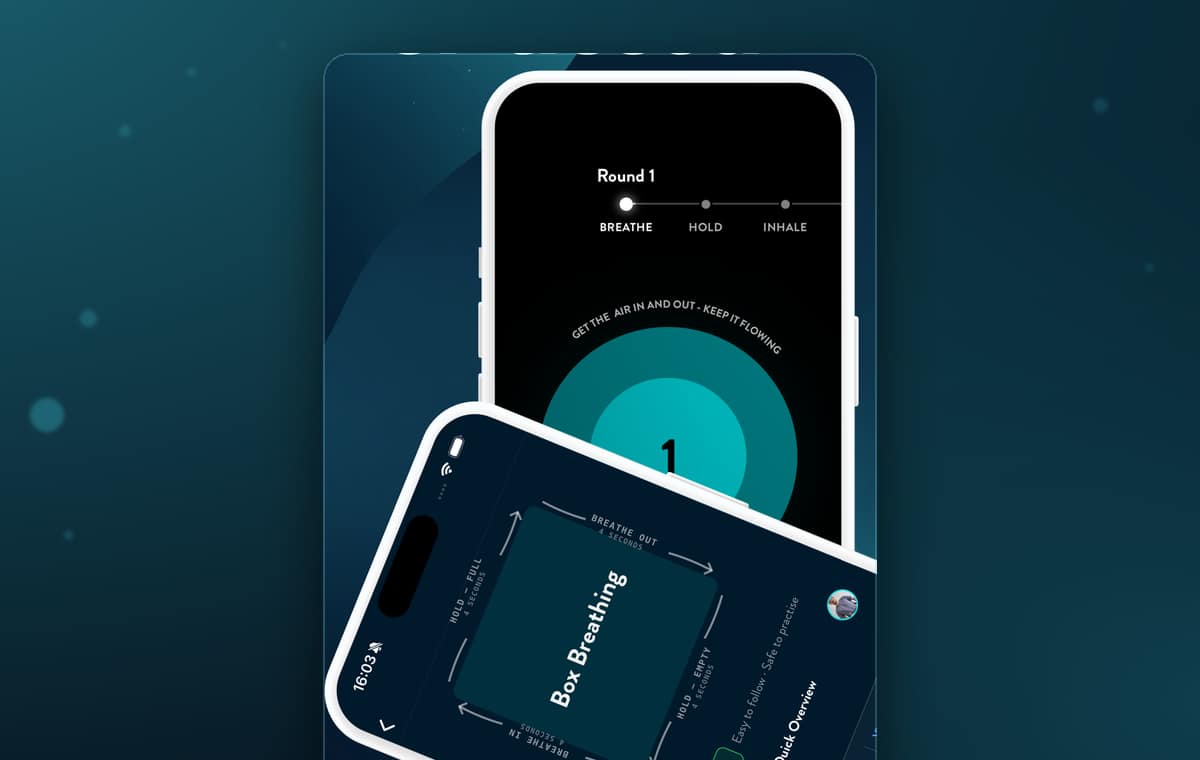
What a round is
A round is the same three moves every time. Huff counts and paces all of it, so you never have to keep track.
Thirty deep breaths
In through the nose or mouth and out easily, without forcing anything. Not fast, not strained. Around two minutes. You may start to tingle in your hands and face, which is normal and is the point.
Let it go and hold
After the last breath out, you simply stop and hold, with your lungs mostly empty. Stay for as long as it feels comfortable, up to a minute and a quarter. It is far easier than it sounds, because the deep breathing has changed the urge to breathe.
One big breath in, and recover
Take a full breath in, hold it for a few seconds, and let it go. Half a minute of stillness, then the next round begins. Most sessions are three rounds.
Three rounds end to end is about eleven minutes.
The shape of a round
What your breath does
Drawn to scale, except the hold, which is shortened to fit. The long flat stretch is the breath hold, and it is most of the round. The dot runs the round at real speed: 2.0s in, 1.6s out, then the hold, so you can breathe along with it.
Between rounds · breathe normally
The floor of every breath is a relaxed exhale, not a squeezed one, and the hold sits at that same level. Then it starts again: 3 rounds, about 11 minutes end to end.
What to expect
None of this is a problem, and all of it settles. Knowing it is coming makes the first session much easier.
Tingling
CommonHands, feet, lips and face may buzz or prickle during the breathing. It fades in the hold.
Lightheadedness
CommonA floaty, slightly dizzy feeling. This is why you lie down, and why you never do this in water.
Warmth, or a shiver
VariesSome people get hot, some get a cold rush. Both are normal.
Emotion
SometimesIt can bring things up. Let it pass, keep breathing gently, and stop if you want to.
A long, easy hold
SurprisingMost first-timers hold far longer than they expect, without any strain. That is the physiology, not willpower.
Deep calm afterwards
The pointThe few minutes after the last round are the reward. Stay lying down and enjoy them.
You never have to count anything
Huff paces every breath, times the hold, and tells you when to come back. Eyes open to follow the visuals, or eyes closed and follow the sound.
- A breath-by-breath visual, with sound if you would rather close your eyes
- The hold times itself, and you end it whenever you like
- A walkthrough the first time, so nothing is a surprise
- Your rounds and hold times saved afterwards, if you want to watch them grow

Doing it safely
This style of breathing changes your blood chemistry on purpose, and it can make you lightheaded or briefly faint. That is manageable, but only if you are somewhere safe.
- Never in or near water. No baths, showers, pools, lakes or sea. This is the one that hurts people.
- Never while driving, cycling, or operating anything.
- Lie down, or sit somewhere you would be perfectly fine if you drifted off. Not standing.
- Do not force the breath. If anything feels wrong, stop and breathe normally.
Do not practise it at all if you are pregnant, or if you have a heart condition, high blood pressure, any cardiovascular problem, or epilepsy. If you are unsure, ask your doctor first.
The other techniques: box breathing for focus under pressure, and 4-7-8 breathing for winding down at bedtime.
Try a round tonight
Huff is free to download, and guides the whole thing. You can also breathe it live with a room of other people, twice a day.