
A short breath in, a long hold, and a very slow way down
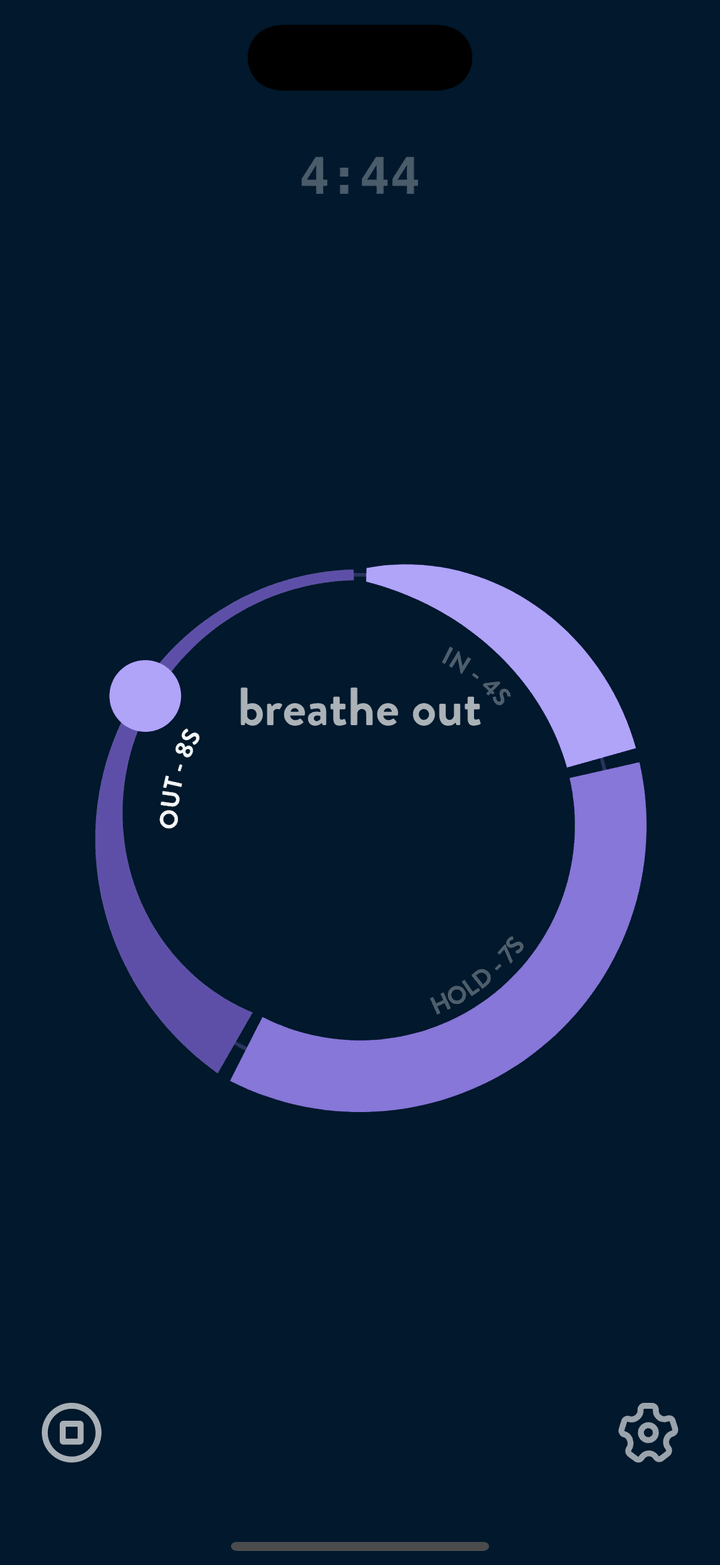
4-7-8 breathing is a wind-down technique built for sleep. In for four, hold for seven, out for eight. The exhale is twice the inhale, and that ratio is the whole trick: it is the part that tells your body the day is over.


Three moves, nineteen seconds
There is no fourth side and no pause at the bottom: the next breath in follows straight on. Huff counts all of it.
In for four, through the nose
Quietly and without filling right up. This is the short part on purpose, so keep it unhurried rather than deep.
Hold for seven
The longest side, and the one that feels strange first time. Stay loose in the throat and shoulders. If seven is too much, scale the whole thing down and keep the ratio.
Out for eight, slowly
A long, controlled exhale, ideally through the mouth with the lips slightly pursed. Aim to still have a little air left at eight rather than running out at six.
Four cycles is a little over a minute, and is enough for most people at bedtime.
The shape of a cycle
Why the exhale is the point
Drawn to real time, so you can see how lopsided it is: a quick climb, a long flat hold, then a slow glide all the way down. That long way down is what makes it more settling than an even rhythm. The dot runs it at real speed, so you can breathe along with it right here.
One cycle is nineteen seconds. Four of them takes about a minute and a quarter, which is the usual bedtime dose.
What to expect
The first two or three cycles are the awkward ones. Almost everybody finds it settles from there.
The hold feels long
CommonSeven seconds is more than you are used to. It stops feeling long once the exhale slows your breathing down.
Running out of air
First cyclesUsually means the inhale was too big, not too small. Take less in and the eight-second exhale gets easier.
Heaviness
The pointA sinking, weighted feeling in the limbs. That is the wind-down arriving, and it is what you are here for.
A little lightheaded
SometimesEase off, breathe normally for a moment, then start again more gently. It should never feel like effort.
Yawning
Good signVery common a few cycles in, and a reliable sign your body has taken the hint.
Not a focus tool
Use boxThis one takes the edge off. If you need to sharpen up rather than switch off, box breathing is the one you want.
Built to be done with your eyes closed
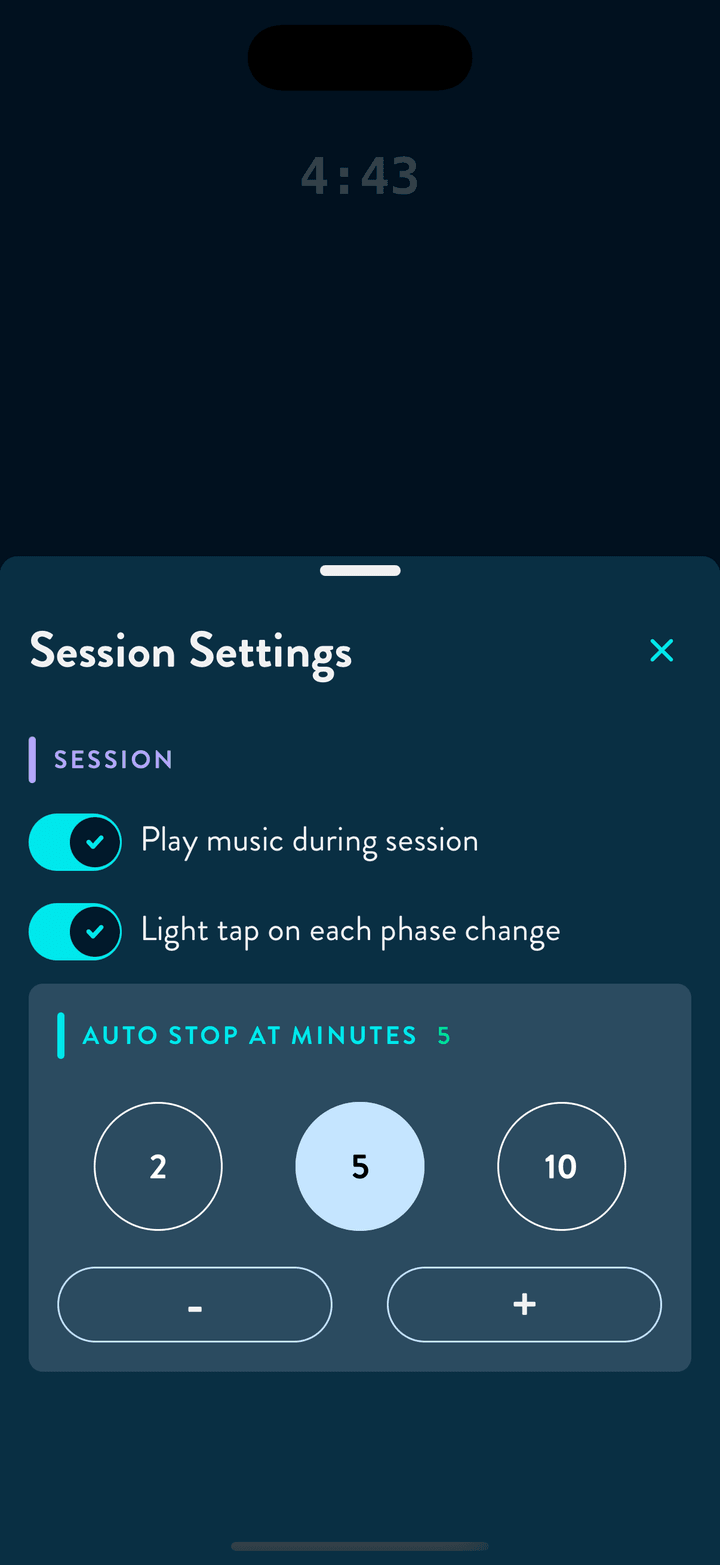
It is a bedtime technique, so counting on a bright screen would defeat it. Huff paces the whole cycle in sound, sets itself to stop, and gets out of the way.
- Every phase counted, so you can lie in the dark and follow the sound
- Optional ambience that fades out over the last cycle
- Set it to stop itself after two, five or ten minutes
- Gentle haptics if you would rather feel the count than hear it
Doing it safely
4-7-8 is a gentle technique and most people can practise it without any trouble. The long hold is the only part that asks anything of you, and it should never be a strain.
- Keep the ratio, not the numbers. If 4-7-8 is too much, do 2-3.5-4 or 3-5-6. The proportions are what matter, and you can build up over a week or two.
- Lie down or sit comfortably. It is designed for bedtime, so there is no reason to do it standing.
- Never while driving, cycling, or operating anything. It is meant to make you drowsy.
- Stop if it feels like effort. Breathe normally for a few breaths and start again smaller.
If you are pregnant, or have a heart or respiratory condition, check with your doctor before taking up any breathing practice. It should never leave you gasping or straining for the next breath.
The other techniques: to sharpen up rather than switch off, try box breathing. For the deep-breathing-and-hold method, see Wim Breathing.
Try it tonight
Huff is free to download and paces the whole cycle, so you can put the phone down and close your eyes.